




Beginner’s Guide to Anal Play
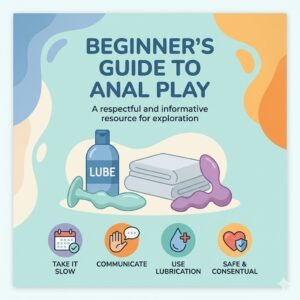 Anal play is one of the most misunderstood areas of human sexuality, often surrounded by stigma, misinformation, and unnecessary mystery. The truth is, with the right knowledge and approach, it can be a safe, pleasurable, and deeply intimate experience for anyone, of any gender, and in any relationship configuration.
Whether you’re curious for the first time or looking to build on previous experience, you’ll find evidence-based, practical information here, no shame, no judgment, just facts and guidance.
Important: This guide is for educational and harm-reduction purposes. It is not a substitute for professional medical advice. If you experience persistent pain, bleeding, or other concerns, consult a healthcare provider. All sexual activity should be between consenting adults.
Anatomy Basics — Understanding the Body
Before exploring anal play, a foundational understanding of anatomy makes the entire experience safer and more enjoyable. The anorectal region is a complex, sensitive part of the body that responds best when approached with knowledge and patience.
The Two Sphincters
The anus is guarded by two distinct muscular rings called sphincters. The external sphincter is under your voluntary control; you can consciously relax it. The internal sphincter, however, is involuntary and controlled by the autonomic nervous system. It relaxes in response to arousal and gentle, sustained pressure, not to force or willpower. This is why rushing never works: the internal sphincter simply won’t comply.
Understanding this distinction is key. Many people try to “push through” tension, which leads to discomfort or pain. The correct approach is to allow time, warmth, arousal, and gentle pressure to naturally encourage relaxation.
The Rectal Lining
Just inside the anus lies the rectum, lined with delicate mucous membrane tissue. Unlike the vagina, this tissue is not designed to self-lubricate and is significantly thinner and more porous. This has two important implications:
-
-
- Lubrication is always required; the tissue cannot produce its own
- Substances absorb readily, including lubricants, medications, and pathogens
- Micro-tears can occur easily, especially without sufficient preparation and lube
- STI transmission risk is elevated, precisely because of this absorbency and tissue fragility
-
Nerve Endings & Pleasure
The anal area is extraordinarily rich in nerve endings, comparable to other highly sensitive erogenous zones. The anus and perineum contain thousands of sensory receptors that respond to touch, pressure, and warmth, which is why external stimulation alone (no insertion required) can be intensely pleasurable.
The Prostate (P-spot)
In people with a prostate, the prostate gland sits approximately 5–7 cm inside the rectum toward the navel. When stimulated via the rectal wall, it can produce powerful sensations and intensify orgasm. This is sometimes called the “male G-spot” or P-spot. Prostate massage is both pleasurable and, for some, a component of prostate health maintenance. For people without prostates, the analogous zone is the A-spot or anterior fornix region, which can be stimulated indirectly.
Key Takeaway
The anus does not naturally self-lubricate, and the internal sphincter cannot be forced open. Both lube and patience are physiological requirements, not optional preferences.
Communication & Consent
No guide to any sexual practice would be complete without centring consent and communication. These aren’t formalities; they are the literal foundation of good sex. This is especially true for anal play, which requires a higher degree of trust, vulnerability, and ongoing atonement between partners.
Before You Begin: The Conversation
Discussing anal play before the moment arrives removes pressure and anxiety from the encounter itself. Choose a neutral time (not in the middle of sex) to talk about curiosity, interest, concerns, and limits. Some questions worth exploring together:
-
-
- What specifically are you each curious about or interested in?
- What are the hard limits — things that are absolutely off the table?
- How will you communicate during — words, sounds, signals?
- What would make each person feel safe and comfortable?
- Who will take the lead, and how will pacing be decided?
-
Safe Words & Signals
A safe word is a pre-agreed word or signal that means “stop everything immediately.” The classic traffic-light system works well: green = all good, yellow = slow down / check in, red = stop completely. If verbal communication is difficult in the moment (due to a gag, position, or simply being overwhelmed), agree on a physical signal, three taps, a squeeze, or a hand gesture.
In-the-Moment Communication
Ongoing check-ins during anal play aren’t interruptions; they’re part of the experience. Questions like “Is this okay?”, “Want more?” or “Should I slow down?” demonstrate care and attentiveness. The receiving partner should feel empowered to direct pace, depth, and sensation at all times.
Pay attention to non-verbal cues too: tension, silence, stillness, or changed breathing can all indicate discomfort. If in doubt, pause and check in.
Consent is Always Ongoing
Agreement to try something does not mean agreement to all variations, all intensity levels, or continued agreement if something changes. Either partner can withdraw consent at any moment for any reason, and that decision must be respected immediately, without question, guilt, or argument.
Remember
“I thought you were into it” is not a substitute for an enthusiastic yes. Check in early, check in often, and create an environment where “stop” is always safe to say.
Preparation & Hygiene
Anxiety about cleanliness is the number one thing that keeps people from exploring anal play or enjoying it when they do. The good news: preparation is simpler than most people think, and obsessive cleaning causes more problems than it solves.
Diet & Natural Timing
The rectum is not a storage organ; it’s a transit zone. When not actively passing stool, it is typically empty. A bowel movement 1–2 hours before anal play generally leaves the rectum clean enough for comfortable, relaxed exploration. Eating a high-fibre diet generally helps with predictable, well-formed movements, which makes preparation easier.
External Cleaning
Thorough washing of the external anal area with mild soap and warm water is all that’s needed for most people in most situations. Shower beforehand, gently wash the area, including the skin folds, rinse well, and pat dry. Avoid strongly scented soaps, which can irritate.
Anal Douching: Optional
Anal douching (rinsing the lower rectum with water) is a personal choice, not a necessity. Many people explore anal play with no douching at all. If you choose to douche:
-
-
Use a bulb douche or shower attachment
-
Bulb douches are widely available, inexpensive, and easy to control. Use only lukewarm water, nothing else.
-
-
Use small amounts of water
-
One or two bulb-fills are sufficient for the lower rectum. Avoid filling the colon too high; this can disrupt gut flora and trigger unintended movement.
-
-
Allow time to expel completely
-
Give yourself 15–30 minutes after douching before sex. Residual water can cause discomfort or unexpected leakage.
-
-
Don’t over-douche
-
Frequent or excessive douching disrupts the natural mucus lining of the rectum, increasing vulnerability to micro-tears and infection.
Other Practical Prep
-
-
- Lay down a dark-coloured towel or use a waterproof sheet; this removes anxiety about mess and lets you relax fully
- Trim and file your fingernails smooth; if using fingers, rough or sharp edges can cause tears in delicate tissue
- Have all supplies ready beforehand: lube, toys, wipes, condoms. Fumbling mid-session breaks momentum and can cause anxiety
- Ensure the room is warm; cold environments increase muscular tension
-
Perspective Check
Trace amounts of faecal matter are a normal reality of anal play. Preparing thoughtfully minimises this, and accepting it calmly removes enormous psychological pressure. Most experienced practitioners treat it as a non-issue.
Lubrication — The Non-Negotiable
If there is one single rule in anal play, it is this: use lube, use more than you think, and then use some more. The anus produces zero natural lubrication. Without lube, friction causes micro-tears in the rectal lining, which increases pain, increases infection risk, and makes the experience wholly unpleasant.
Lube isn’t just a comfort enhancement; it’s a physiological necessity. Different types of lubes have different properties and use cases, and choosing the right one matters.
|
Type |
Best For |
With Condoms |
With Silicone Toys |
Longevity |
Notes |
|
Water-based |
General use, beginners |
✓ Yes |
✓ Yes |
Short — reapply often |
Most versatile, easy to clean up, widely available |
|
Silicone-based |
Longer sessions, water play |
✓ Yes |
✗ No |
Long-lasting |
Degrades silicone toys; great for penis-in-anus intercourse |
|
Oil-based |
Solo play without condoms |
✗ No |
⚠ Caution |
Very long-lasting |
Degrades latex condoms; difficult to clean; can disrupt gut flora |
|
Hybrid |
Balanced option |
✓ Yes |
⚠ Check label |
Medium |
Water-silicone blend; check the silicone content before use with toys |
Application Tips
-
-
- Apply lube to both the toy/finger AND the external anal area before insertion
- Apply internally as well; a finger with lube applied can distribute it inside the opening
- Don’t wait until things feel dry to reapply; anticipate and reapply proactively
- Avoid lubes containing glycerine (can cause yeast infections), menthol, or numbing agents (numbing masks pain signals that protect you from injury)
- Warming lubes can feel pleasant, but test on skin first; some formulas cause irritation
-
Never Use Numbing Products
Desensitising sprays or creams may seem like they help beginners, but they remove the body’s pain signals, which are there to protect you from injury. If something hurts, that’s important information. Numbing it and pushing through causes real damage.
Starting — Technique & Pacing
The biggest mistake beginners make is rushing. The second biggest is not combining anal stimulation with another arousal. Both sphincters relax most readily when the body is already aroused, warm, and comfortable. Building up slowly, often over multiple sessions, is not just a nice idea; it’s the physiologically correct approach.
Step 1: External Stimulation First
Always begin externally. Use well-lubricated fingers to massage the perineum and the external anal opening with light, circular pressure. This is pleasurable and begins the process of relaxation. There’s absolutely no rule that says you must insert anything; external play alone is valid and enjoyable.
Step 2: Breathing & Relaxation
Deep, slow breathing activates the parasympathetic nervous system, the “rest and digest” mode, which promotes muscular relaxation. The receiving partner should focus on slow exhales, relaxing the pelvic floor deliberately. Many people find it helpful to bear down slightly (as if passing a bowel movement) when something is being inserted, which temporarily opens the external sphincter.
Step 3: One Finger (or Small Toy)
When ready for insertion, use one well-lubed finger or a small toy. Enter very slowly, following the body’s lead. The internal sphincter will yield when it’s ready; you should feel a natural relaxation and acceptance of the object. If there is resistance, stop, breathe, and wait. Forcing through resistance causes tears.
Positions for Beginners
-
Lying on your side (spooning)
Highly recommended for beginners. The receiving partner controls access, minimal gravitational pressure, easy to relax the pelvic floor. Great for couples.
-
On all fours (doggy)
Allows good access and visual feedback for the giving partner. The receiving partner can lower their chest to further open the angle. Maintain control of depth.
-
Receiving partner on top
Maximum control for the receiving partner. They control all depth and movement. Recommended when trust and communication are still being established.
-
On back with legs raised
Good visibility and access. Can feel vulnerable; best with a trusted partner. A pillow under the hips helps with angle and comfort.
Pain vs. Discomfort — Know the Difference
Some initial unfamiliar sensation or mild stretching discomfort is normal for beginners. This typically eases within 30–60 seconds as the body adjusts. Pain that persists, intensifies, or feels sharp is a stop signal. Stop, remove whatever is inserted, and assess. Pain during anal play is always meaningful information; it should never be pushed through.
Building Over Multiple Sessions
It is entirely normal, and actually ideal, to take several sessions to progress from fingers to toys, or from smaller to larger items. The sphincters develop more elasticity and comfort over time. There is no timeline, no milestone to hit, and no endpoint you must reach.
Combine with Other Stimulation
Anal play is often most pleasurable when combined with genital stimulation. Arousal increases blood flow to the pelvic region, relaxes muscles, and heightens all sensations. Many people find they cannot relax enough for comfortable anal play without also being genitally stimulated.
Toy Safety & Product Guide
The sex toy industry is largely unregulated, which means not all products are safe. For anal play specifically, the stakes are higher than with other categories. Understanding what to look for and what to avoid is essential.
The Flared Base Rule
Any object inserted anally must have a flared base (or retrieval cord/ring). This is not a preference; it is a safety rule. The anal sphincters can pull objects inward, and items without retrieval points can travel far into the rectum and colon, requiring emergency medical removal. This happens more often than you’d think, and it’s entirely preventable.
A flared base is a wide, flat portion at the end of the toy that physically cannot enter the anus. It sits against the body and ensures the toy can always be retrieved. Butt plugs, anal beads, and prostate massagers all come with flared bases, which is what makes them anal-safe. Regular vibrators, dildo-shaped items without bases, and household objects do not qualify.
-
-
Butt plugs
-
Best starting point. Designed for sustained wear. Choose a small, tapered option. Always flared base. Try silicone.
-
-
Anal beads
-
Graduated sizes. Stimulation comes from insertion and removal. Ensure the retrieval cord is robust and attached securely.
-
-
Prostate massagers
-
Curved to reach the prostate. Many vibrate. Choose small sizing for beginners. Body-safe silicone preferred.
-
-
Fingers
-
The best beginner “toy.” Free, controllable, warm. Trim nails, use lube, go slowly. Cover with a latex glove if preferred.
Body-Safe Materials
-
-
- Medical-grade silicone: Non-porous, easy to sterilise, flexible, body-safe. The gold standard for most toys.
- Stainless steel: Non-porous, heavy, conducts temperature well (can be warmed or cooled). Very durable. Look for surgical-grade 304 or 316.
- Borosilicate glass: Non-porous, temperature-responsive, beautiful. Must be inspected for chips or cracks before each use.
- ABS plastic: Hard, non-porous, safe. Often used in vibrating components. Not flexible.
-
Materials to Avoid
Jelly rubber, PVC, latex (for toys, not condoms), and “mystery” materials labelled “body-safe” without certification. These are porous; they harbour bacteria even after cleaning, and some off-gas chemicals (phthalates) that may cause irritation or harm.
Cleaning & Care
-
-
- Clean toys before AND after every use
- Non-motorised silicone, glass, and stainless steel can be boiled or put in the dishwasher (top rack, no soap) to fully sterilise
- Motorised toys: wash with mild soap and warm water, or use a toy-cleaning spray
- Never move a toy from anal to vaginal use without sterilising it first
- Use a condom on toys for easier cleanup and safer sharing between partners
- Store toys in fabric pouches, not loose in a drawer, where they can contact each other
-
STI Awareness & Sexual Health
Anal sex carries the highest STI transmission risk of any common sexual activity, due to the thin, highly absorbent rectal lining and likelihood of micro-tears during penetration. This is not a reason to avoid it; it’s a reason to practise informed, protected sex.
Why the Risk is Higher
The rectal mucous (lining) is thinner and more permeable than vaginal tissue. Even without visible injury, pathogens can cross the membrane into the bloodstream. HIV, for instance, transmits far more readily via anal sex than via vaginal sex. Additionally, many anal STIs, particularly gonorrhoea and chlamydia of the rectum, produce no symptoms, meaning people can carry and transmit them without knowing.
|
STI |
Transmission Risk |
Symptoms (may be absent) |
Prevention |
|
HIV |
High (receptive partner) |
Often none initially; flu-like illness |
Condoms, PrEP, Undetectable=Untransmittable (U = U) |
|
Gonorrhoea (rectal) |
High |
Often none; discharge, pain |
Condoms; regular testing |
|
Chlamydia (rectal) |
High |
Usually none |
Condoms; regular testing |
|
Herpes (HSV-2) |
Moderate–high |
Sores, pain, or none |
Condoms reduce (don’t eliminate); antivirals |
|
HPV |
High (skin contact) |
Usually none; warts; anal cancer risk |
HPV vaccine (Gardasil); condoms partially |
|
Syphilis |
Moderate |
Painless sore (chancre) |
Condoms, regular testing, and penicillin treatment |
Key Prevention Strategies
-
-
- Condoms: Correctly used condoms dramatically reduce transmission of HIV, gonorrhoea, chlamydia, and syphilis. Use a compatible lube (never oil with latex).
- PrEP (Pre-Exposure Prophylaxis): A daily medication (or on-demand dosing) that prevents HIV with over 99% efficacy. Available via sexual health clinics and GPs in most countries.
- PEP (Post-Exposure Prophylaxis): Emergency medication taken within 72 hours of potential HIV exposure. Seek it immediately if relevant.
- Regular testing: Anyone sexually active with multiple partners should test for STIs every 3–6 months. Request rectal swabs specifically; many standard tests miss anal infections.
- HPV Vaccine: Recommended for all genders up to age 45 in many countries. Prevents the strains most associated with genital warts and anal cancer.
- Hepatitis A & B vaccination: Both are sexually transmissible, and both are vaccine-preventable. Ask your doctor if you’re up to date.
-
Undetectable = Untransmittable (U = U)
People living with HIV who are on effective treatment and have achieved an undetectable viral load cannot sexually transmit HIV. This is a scientifically established consensus. PrEP, condoms, and U = U together represent the most powerful prevention toolkit available.
Aftercare — Physical & Emotional
Aftercare is the intentional attention given to physical and emotional well-being after a sexual experience. It is particularly important after anal play, which can be physically intense, emotionally vulnerable, and occasionally messy in ways that leave people feeling exposed or uncertain.
Good aftercare isn’t just for people who do BDSM. It’s for anyone who’s just shared something vulnerable and intimate. It signals you’re safe, you’re cared for, and we’re in this together.
Physical Care
-
- Clean the area gently with warm water
- Avoid soap inside the anal canal
- Pat dry, don’t rub
- Apply unscented moisturiser to external skin if needed
- Drink water and hydrate
- Rest if desired. Pelvic floor exertion is real
Emotional Care
-
- Check in: “How are you feeling right now?”
- Offer physical comfort, warmth, touch, closeness
- Avoid immediately unpacking or critiquing
- Validate feelings without judgment
- Allow space if a partner needs quiet
- Debrief later when both feel ready
When to Seek Medical Advice
-
- Bright red rectal bleeding that persists
- Severe pain that doesn’t ease within an hour
- Feeling that something may be retained inside
- Fever or abdominal pain following anal play
- Any unusual discharge or sores in the area
What’s Normal
-
- Mild soreness for 12–24 hours
- Slight spotting if the tissue was stretched
- Emotional “drop” or tearfulness (very common)
- Desire for more physical closeness than usual
- Need for food, warmth, and rest
Final Thoughts
A few hours later or the next day, it’s valuable to talk about the experience, what felt good, what didn’t, what you’d like to try differently, and what you’d like more of. This builds trust, improves future experiences, and normalises open sexual communication. Keep the tone curious and collaborative, not critical.
Sub-drop and Emotional Vulnerability
Particularly after intense experiences, some people experience a sudden drop in mood, energy, or emotional regulation, sometimes called sub-drop. This is a recognised physiological response related to hormonal shifts after intense arousal and activity. It can manifest as tearfulness, anxiety, or feeling strangely low. Knowing this can happen allows partners to provide reassurance and allows the person experiencing it to not be alarmed by their own feelings.
Aftercare for Solo Play
Aftercare isn’t only for partnered sex. After solo anal play, extend yourself the same kindness: clean up properly, get comfortable, eat something if needed, and rest. Self-compassion and self-care apply here, too.
The Three Golden Rules
If you remember nothing else from this guide, remember these.
Consent
Always ongoing, enthusiastic, and freely given. Either person can stop at any time for any reason. No exceptions.
Lube
More than you think. Then a little more. The anus doesn’t self-lubricate, ever. Lube is not optional.
Go Slow
Patience isn’t just polite; it’s physiologically correct. The body needs time to relax and adjust. Rushing causes injury.
Further Reading & Resources
Sexual health is best supported by accurate, professional information. The following organisations provide free, evidence-based resources:
-
-
- Planned Parenthood — plannedparenthood.org — comprehensive sexual health education
- Scarleteen — scarleteen.com — inclusive sex education for teens and young adults
- BASHH (British Association for Sexual Health and HIV) — bashh.org — clinical guidelines and resources
- The Well Project / aidsmap — aidsmap.com — HIV and related STI information
- Your local sexual health clinic (GUM clinic) — free testing, PrEP, vaccinations, and advice
-
This article is for educational and harm-reduction purposes only. It does not constitute medical advice.
For personal health concerns, please consult a qualified healthcare provider or sexual health clinic.
Frequently Asked Questions
Is anal play safe for beginners?
Yes, anal play can be safe when done slowly, gently, and with proper lubrication. Using body-safe toys and maintaining hygiene are also important.
Do I need special toys for anal play?
Yes. Anal toys should always have a flared base to prevent them from slipping inside the rectum.
Can anal play hurt?
Anal play should not be painful. Discomfort usually means you need more lubrication, relaxation, or a slower pace.
What is the best beginner anal toy?
Small butt plugs or slim anal beads are often recommended for beginners because they allow gradual and comfortable exploration.
Is hygiene difficult before anal play?
Not usually. Washing with warm water and cleaning toys properly is typically enough for most people.
Can couples use anal play to improve intimacy?
Many couples find that exploring new experiences together improves trust, communication, and intimacy.

Leave a Reply
You must be logged in to post a comment.