



Compression Socks: A Complete Guide for Everyday Comfort and Health
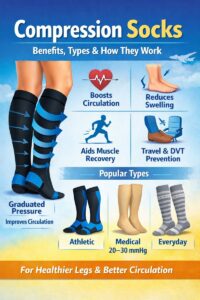 Compression socks have become increasingly popular over the past decade. Once seen mainly in medical settings, they are now widely worn by athletes, travellers, office workers, and people seeking everyday comfort and leg support. But what exactly are compression socks, how do they work, and are they right for you?
In this guide, we’ll break down everything you need to know about compression socks in simple, practical terms.
What Are Compression Socks?
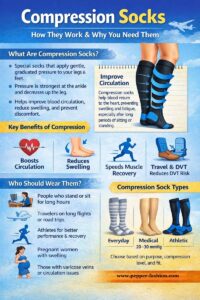
Compression socks are specially designed socks that apply gentle, graduated pressure to your lower legs and feet. The pressure is strongest at the ankle and gradually decreases as it moves up the leg. This design helps encourage blood flow back toward the heart, rather than allowing blood to pool in the lower extremities.
They come in a variety of lengths, including ankle socks, crew socks, and knee-high styles, and are available in different compression levels depending on your needs.
How Do Compression Socks Work?
Your circulatory system works against gravity, especially when blood is returning from your feet and legs back to your heart. When you sit or stand for long periods, circulation can slow down, leading to swelling, discomfort, or fatigue.
Compression socks work by:
-
-
- Gently squeezing the veins and muscles in the legs
- Improving blood circulation
- Reducing pressure in the lower limbs
- Supporting muscle efficiency
-
By improving circulation, compression socks help reduce swelling and discomfort while promoting healthier legs overall.
Key Benefits of Compression Socks
-
-
-
Improved Circulation
-
-
The primary benefit of compression socks is enhanced blood flow. This can be especially helpful for people who sit or stand for long hours, such as office workers, retail staff, or drivers.
-
-
-
Reduced Swelling and Fatigue
-
-
Swollen ankles and tired legs are common complaints after long days or long-haul travel. Compression socks help prevent fluid buildup, keeping legs feeling lighter and more energised.
-
-
-
Support for Athletes and Active Lifestyles
-
-
Athletes often wear compression socks during or after exercise to support muscle recovery. They may help reduce muscle soreness and speed up recovery by improving oxygen delivery to muscles.
-
-
-
Travel Comfort
-
-
Long flights and road trips can increase the risk of leg swelling and discomfort. Compression socks are commonly recommended for travellers to help maintain circulation and reduce the risk of deep vein thrombosis (DVT).
-
-
-
Medical and Health Support
-
-
Compression socks are frequently used by people with varicose veins, circulation issues, or those recovering from surgery. They can help manage symptoms when worn as recommended by a healthcare professional.
Who Should Wear Compression Socks?
Compression socks are suitable for a wide range of people, including:
-
-
- People who stand or sit for extended periods
- Frequent travellers
- Athletes and fitness enthusiasts
- Pregnant individuals experiencing leg swelling
- People with circulation or vein issues
-
While many compression socks are designed for everyday wellness, anyone with a medical condition should consult a healthcare provider before choosing higher compression levels.
Different Types of Compression Socks
Graduated Compression Socks
These are the most common types, with stronger pressure at the ankle and lighter pressure up the leg. They are ideal for daily wear, travel, and general support.
Athletic Compression Socks
Designed for sports and physical activity, these focus on muscle support and recovery while maintaining breathability and comfort.
Medical Compression Socks
These offer higher compression levels and are often prescribed for specific medical conditions. They should be used under professional guidance.
Understanding Compression Levels
Compression socks are measured in millimetres of mercury (mmHg), which indicates the amount of pressure applied.
-
-
- Mild (8–15 mmHg): Everyday comfort, light fatigue, travel
- Moderate (15–20 mmHg): Swelling, sports recovery, long workdays
- Firm (20–30 mmHg): Medical use, varicose veins, post-surgery support
-
Choosing the right level is essential for comfort and effectiveness.
How to Choose the Right Compression Socks
When selecting compression socks, consider:
-
-
- Purpose: Daily wear, travel, sport, or medical support
- Length: Ankle, crew, or knee-high, depending on where you need support
- Fit: Proper sizing is crucial—too tight can be uncomfortable, too loose won’t be effective
- Material: Look for breathable, moisture-wicking fabrics
-
Most brands provide sizing charts based on calf and ankle measurements to help you find the perfect fit.
Tips for Wearing Compression Socks
-
-
- Put them on in the morning when swelling is minimal
- Smooth them on gently—don’t roll or bunch
- Wear them consistently for the best results
- Wash according to care instructions to maintain elasticity
-
Are Compression Socks Safe?
 For most people, compression socks are safe and comfortable. However, individuals with certain conditions, such as severe arterial disease or nerve disorders, should consult a doctor before use.
If you experience pain, numbness, or tingling while wearing compression socks, remove them and consult a professional.
Final Thoughts
Compression socks are a simple yet effective tool for enhancing leg comfort, improving circulation, and promoting overall well-being. Whether you’re travelling, working long shifts, exercising, or simply looking after your leg health, the right pair of compression socks can make a noticeable difference.
With a wide range of styles, compression levels, and designs available today, compression socks are no longer just functional; they’re a practical and accessible addition to everyday wellness.

Leave a Reply
You must be logged in to post a comment.